
ServicesFinancial Advising
Financial Advising in Keyport
Bring us the money question that is weighing on you, and we will help you see it clearly. We look at the facts you share, lay out the tradeoffs in plain language, and give you a considered recommendation you can act on or set aside.
Focused advice, one decision at a time
Financial advising is narrower than a full financial plan. It begins with a single question that matters right now: taking a pension as a lump sum or as monthly income, deciding what an inheritance should do for you, choosing where a retirement account left behind at a former job belongs, or reducing debt while keeping savings intact. We give that question our attention first and take the time it needs.
Some decisions arrive after something goes wrong. A storm-damaged property, a business interruption or a death in the family can bring an insurance claim along with a pile of paperwork. We help you organize the records, understand what the policy says and think through what the settlement means for your finances. We are not the adjuster and we do not predict outcomes, but we can help you ask better questions.
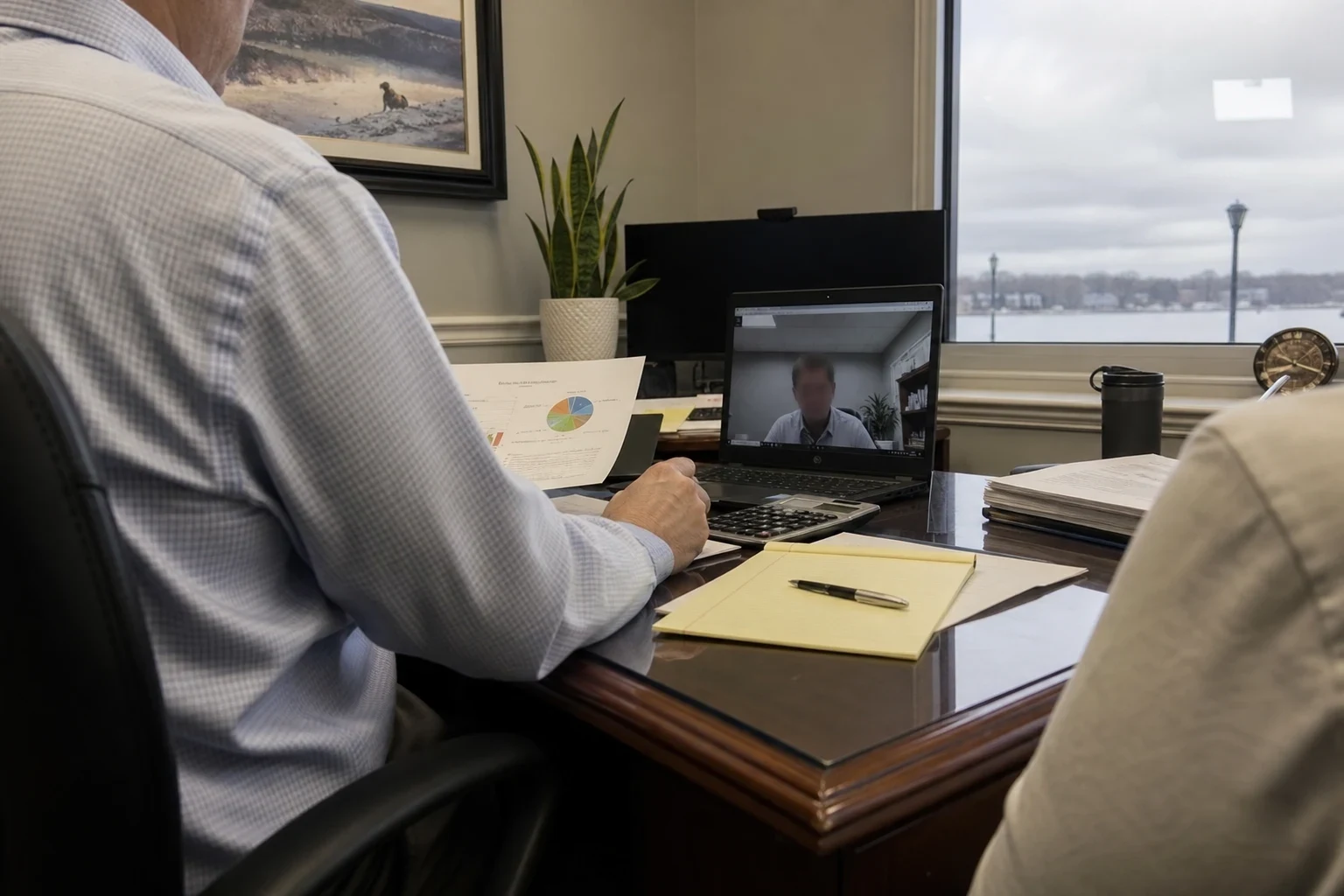
Clients come to us from Keyport, Matawan, Hazlet and nearby towns. Meetings happen in our office, and many clients prefer to talk by phone or video instead.
What our advising covers
A close look at the question
We start by defining the decision precisely. A vague worry about money becomes a specific choice with a deadline and a set of options.
Your full picture, briefly reviewed
Accounts, debts, income, coverage and goals all affect the answer. We review what is relevant so advice on one decision does not quietly undercut another.
Options with tradeoffs written out
You get the realistic choices side by side, with the costs, risks and tax effects of each. We say which one we would lean toward and why.
Organizing records after a loss
If a claim is part of the picture, we help you gather policy documents, photos, receipts and correspondence into an order an adjuster can follow. We explain the general process and what a settlement could mean for your long-term plans.
A clear next step
Advice is only useful if you can act on it. We finish with what to do, who to contact and in what order. If the question turns out to need ongoing work, we will tell you whether financial planning or investment management makes sense.
When it is time to talk to an advisor
- A deadline is approaching
- Benefit elections, rollover windows and pension choices often come with a date attached. Getting advice a few weeks ahead leaves room to think.
- Money arrived all at once
- An inheritance, a bonus, a business sale or an insurance payout can feel urgent to spend or invest. It usually pays to pause and decide deliberately.
- The paperwork after a loss is piling up
- After damage or a death, the forms and the money questions tend to blur together. A calm second set of eyes helps you separate the two.
- You and your partner see it differently
- Couples often disagree on risk, saving or debt. A neutral conversation with the numbers on the table can settle it.
- Your situation has changed
- Marriage, divorce, a new child, a new business or a parent needing care all shift the math. Advice built for your old life may no longer fit.
How working with us unfolds
- 1
Introductory meeting
We talk through what prompted the call, what you hope to decide and which documents would help. Before any work begins, we explain our approach and our fees so you can decide whether to continue.
- 2
Gathering the facts
You share statements, policies or offers relevant to the question. For a claim, this is when we help sort photos, estimates and correspondence.
- 3
Analysis and a recommendation
We work through the options and meet again to walk you through them. You will see the reasoning, not just the conclusion.
- 4
Follow-through
We help you put the decision in motion and check back once it is done. If more questions surface, we take them up in turn.
What shapes the cost of advice
The cost depends on how much work the question takes, and we explain it in plain terms during the introductory meeting. You will know how we are paid before you commit to anything. There is no obligation to continue after that first conversation.
- Complexity of the decision
- Choosing between two retirement account options takes less time than weighing a business sale with tax and estate consequences.
- Number of accounts and documents
- Many scattered accounts, policies or old employer plans take longer to review than a few consolidated ones.
- Records after a loss
- Organizing paperwork after damage or a death can be quick or involved, depending on how much documentation already exists.
- One-time or ongoing
- A single decision is priced differently from a continuing advisory relationship that includes wealth management or regular reviews.
Questions about financial advising
- How is financial advising different from financial planning?
- Advising usually centers on a specific decision you are facing now. Financial planning builds a complete, long-term roadmap across savings, investments, retirement and legacy. Many clients start with advising and move into planning later, but there is no requirement to.
- Can you handle my insurance claim for me?
- No. We do not act as your adjuster or negotiate with the insurer on your behalf. We help you organize your records, understand the policy language in general terms and think through what the payout means for your finances, so your conversations with the insurer are clearer.
- Will you push me to buy a product?
- Our job is to help you make a sound decision. Sometimes the right answer is to do nothing or to keep what you already have, and we will say so plainly.
- What should I bring to the first meeting?
- Bring whatever relates to the question: account statements, a pension or benefits packet, an insurance policy or the offer you are weighing. If you are unsure, we will tell you on the call what would be most useful.
- Do I have to meet in person?
- No. We meet at our office, and we also work by phone and video. Many clients do a mix of both.
Talk through the decision you are facing
Bring the question and whatever paperwork you have. We will help you see the options clearly and decide on a sensible next step together.